Food Traceability: Everything You Need to Know
4 min read
In the modern food industry, consumer trust is the A and Z. But how is trust earned? Through the excellent quality of the products but also non-negotiable transparency. Therefore, safety, compliance and speed of reaction are crucial.
This is where food traceability systems come into play, which are a basic requirement for organization and control. At the same time, they help businesses to manage potential risks more effectively, to react immediately in cases of problems or recalls and to strengthen their overall credibility towards consumers and partners.
What is food traceability?
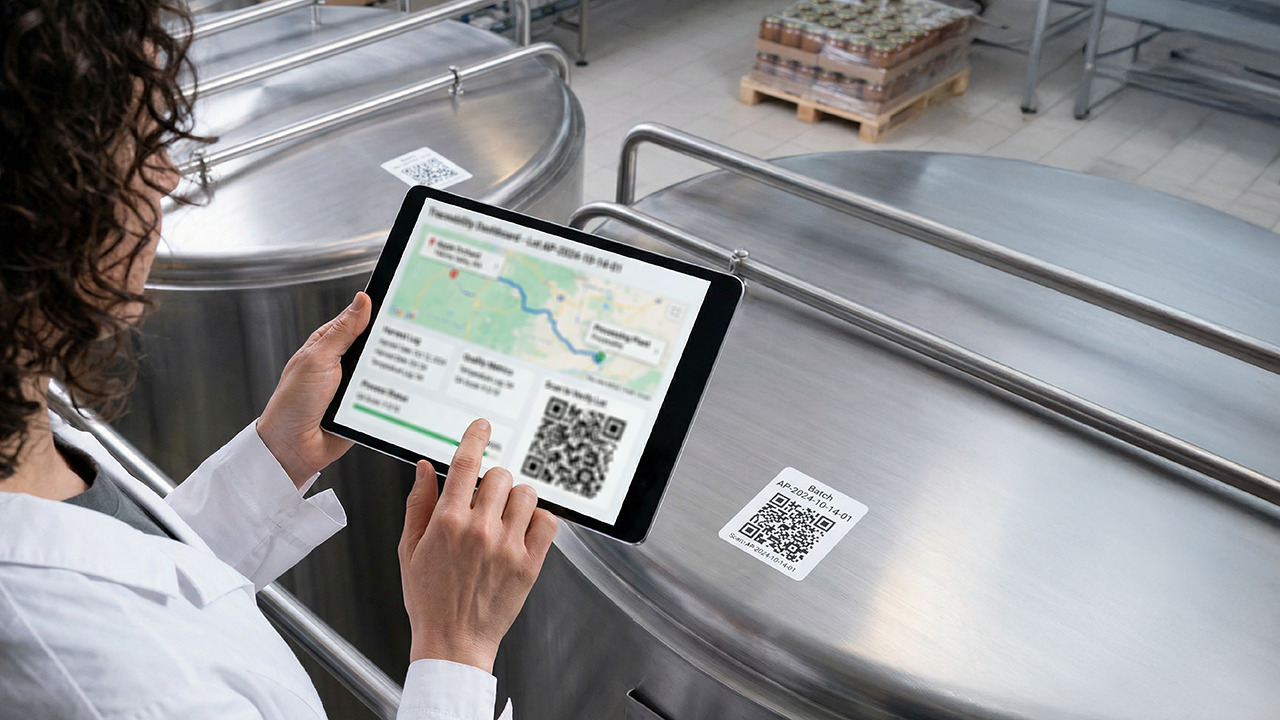
Traceability is the ability to track any food, feed or ingredient through all stages of production, processing and distribution. It essentially allows businesses to know where a product came from, what stages it went through and where it ultimately ended up so that they can effectively manage potential risks and respond promptly to recalls or audits.
Why is Food Traceability Necessary?
The implementation of a traceability system serves three main purposes:
- Food Safety: Rapid withdrawal or recall of products in case of risk
- Legal Compliance: Compliance with EU regulations
- Brand Protection: Strengthening the credibility of your business against audits and customers
What are the basic requirements of food traceability?
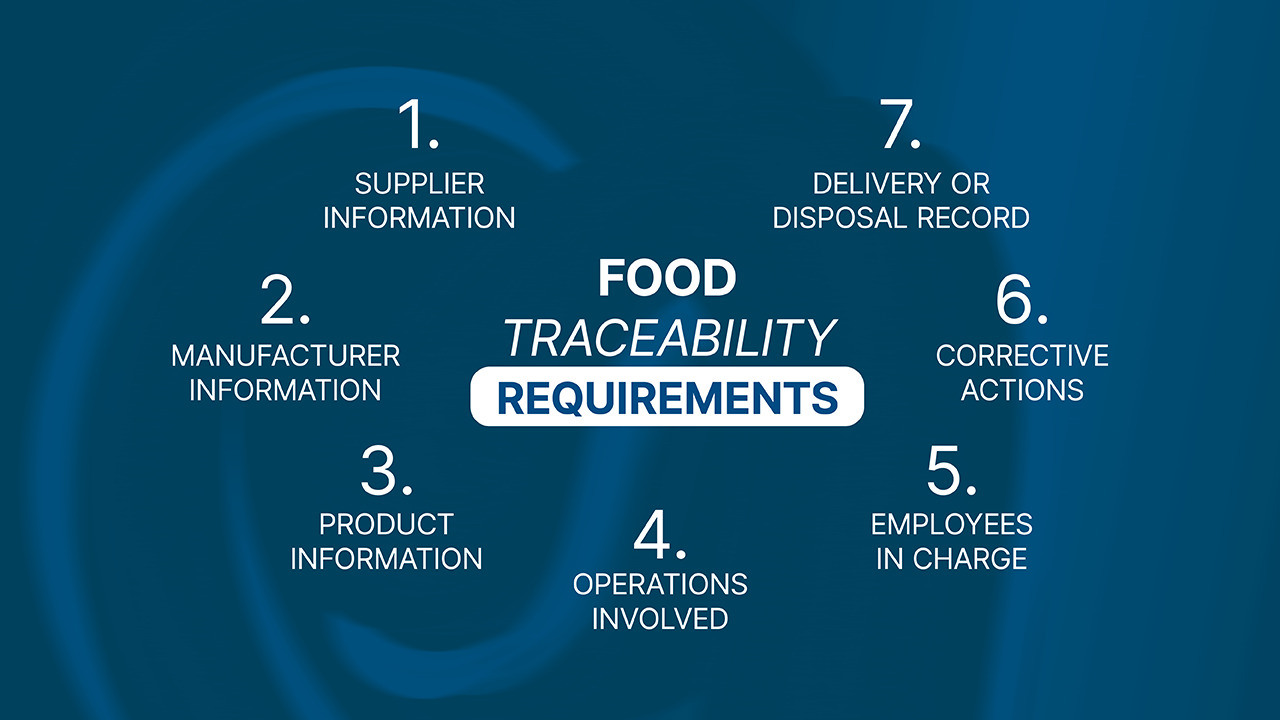
For a traceability system to function effectively, it is not enough to simply record general information, but to also collect and maintain specific data related to each stage of the supply chain.
In this way, businesses can quickly identify the origin of a product and monitor its progress and react immediately in the event of a problem.
Supplier Information
Every business needs to know clearly from whom it has sourced raw materials, ingredients or finished products.
Supplier information is a key part of traceability and helps to identify the source of a potential problem.
Product and batch data
Product records should include information such as batch code, production date, expiration date, quantity, and any other relevant characteristics. This way, in the event of a deviation, the company can narrow down the problem to specific batches.
Recording production and processing processes
Traceability does not only concern the final product, but also the intermediate stages followed. It is important to record the production, processing, storage, and packaging processes, so that there is a complete picture of the path of each product.
Distribution and delivery data
Equally important is the ability to track where each product ended up. The company needs to know which customers or points of sale a particular batch was distributed to, so that it can immediately proceed with a withdrawal or recall, when necessary.
Corrective actions and audit records
In the event of a problem, it is not enough to simply identify it. The actions taken to address it also need to be recorded. These records are critical for both compliance and the improvement of internal processes.
How is food traceability implemented in practice?
In practice, food traceability requires the systematic recording of data at every stage of the supply chain, from the receipt of raw materials to production, storage and distribution.
To be truly effective, this process must be based on properly organized information flows, so that each product can be immediately and accurately traced.
This means that companies need to have a complete picture of batches, suppliers, production dates, warehouse movements and distribution points. The more immediate and reliable access to this data, the easier it is to manage a potential problem or recall.
Why is a digital traceability system essential for modern businesses?
As demands for transparency, security and compliance increase, tracking data through manual processes or fragmented records is often not enough. Modern food businesses need solutions that allow them to have centralized, immediate and reliable information for every stage of the production and logistics process.
A traceability system contributes to better organization of data, faster search for critical information and reducing the risk of errors. At the same time, it helps businesses strengthen control of their processes, respond faster to inspections or recalls and more effectively support their compliance with regulatory requirements.
Food traceability is not just a formal obligation, but a critical mechanism for the safety, compliance and smooth operation of every business in the sector. From recording supplier and batch data to tracking distribution and corrective actions, every piece of information plays an important role. In an environment where speed and accuracy are crucial, leveraging an organized traceability system can significantly help businesses improve their control, reduce risks and enhance their credibility in the market.
At Hubin, we support food businesses in their efforts to meet modern traceability requirements, offering solutions that enhance organization, transparency and control at every stage of the supply chain, through modern traceability systems.
Frequently Asked Questions about Food Traceability (FAQs)
Is traceability mandatory by law?
Yes, under European Regulation 178/2002 (Article 18), all food and feed businesses in the EU are required to implement traceability systems at all stages of production and distribution.
Can I maintain traceability manually?
Yes, the legislation does not impose the medium, digital or paper. However, handwritten compliance makes the recall extremely slow and increases the risk of fines in the event of an audit due to incomplete data. On the contrary, a modern digital traceability system reduces the chances of errors.
What elements should a food traceability system include?
A traceability system must include information about the supplier, the product, the batch, the production and processing processes, the distribution, as well as the corrective actions taken in the event of a problem.
Which businesses need a food traceability system?
Traceability systems are needed by all businesses operating in the food chain, from producers and processors to storage, distribution and marketing companies. The ability to track the progress of products is critical for safety and compliance.
How can a traceability system improve the operation of a food business?
An organized traceability system helps a business gain better control over its processes, enhance compliance, and manage potential risks more effectively. At the same time, it supports transparency and more immediate decision-making.