Lot Tracking: What information does a product lot include?
5 min read
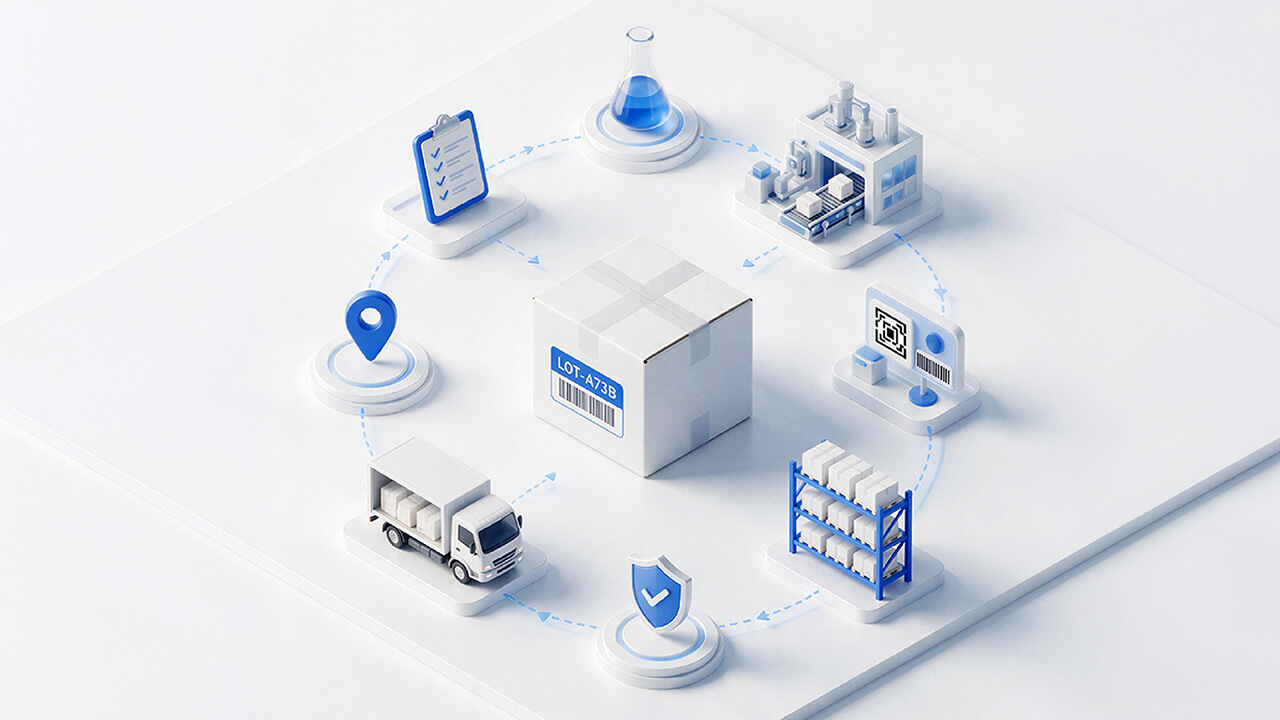
Behind every product batch lies a set of information that enables a business to know exactly what occurred at each stage. A batch comprises products that have been manufactured, received, or distributed under common conditions and are linked by a specific batch number.
This number serves as a reference point, allowing for the identification of details such as the origin, production date, raw materials used, and the products’ distribution path.
What is Lot Tracking?
Lot tracking is the process by which a business monitors a specific batch of products from the moment it is created or received until it is distributed.
Each batch is assigned a unique identifier—known as a lot number—that accompanies it and links it to all the key information recorded throughout its lifecycle.
What information does a product batch include?
The information associated with a batch may vary depending on the product and the nature of the business’s operations.
Origin and raw materials
Lot tracking records details regarding the origin of raw materials or products, the suppliers providing them, and the specific batches with which they are associated.
This enables the business to know exactly which materials were used in each batch and to easily trace their origins whenever necessary.
Production and expiration dates
A batch can also be linked to key dates, such as the product’s production or expiration date. Recording this data helps the business monitor the shelf life of each batch, manage inventory effectively, and avoid distributing expired products or those nearing their expiration date.
Production and processing details
Lot tracking can link each batch to information from the production process, such as the production line or stage where it was manufactured, the quantities produced, and the procedures followed.
This way, if an issue arises at a specific stage of production, the business can identify the affected batches and take the necessary actions more quickly.
Quality checks
Results from quality checks performed during production or prior to product distribution can also be linked to each batch.
This enables the business to verify whether a specific batch meets the required specifications, identify potential deviations, and—when necessary—isolate affected products without tying up the entire inventory.
Storage and distribution
Batch monitoring continues after production, covering both storage and distribution. Lot tracking allows for the recording of data regarding a batch’s location, movement history, the warehouse or distribution point to which it was transferred, and the customers or partners to whom it was delivered.
The business can track the movement of its products and quickly pinpoint the current location or final destination of a specific batch.
Why is lot tracking important for a business?
The value of lot tracking extends beyond mere data recording. With all batch data organized and readily available, the business can monitor every stage of a product’s journey and respond more rapidly should a problem arise.
At the same time, it gains greater control over its processes and reduces the time required to search for and verify information.
Faster recall management
With lot tracking, if a product issue is detected, the business can quickly identify the affected batches and track where the products have been distributed.
This makes product recalls more targeted and effective, while also minimizing unnecessary losses.
Improved inventory control and management
By tracking batches, a business gains a clearer picture of available inventory and its specific characteristics. For instance, knowing which batches were received earlier or which products are nearing their expiration date allows for better distribution planning and helps minimize losses caused by products sitting in the warehouse for extended periods.
Traceability and compliance
The ability to trace the origin and movement of a batch enhances traceability throughout the supply chain. At the same time, systematically recording relevant information helps the business more easily meet industry and product-specific requirements, keeping essential data organized and readily available when needed.
Enhanced quality control and troubleshooting
When information regarding each batch is centralized and easily accessible, identifying potential issues and their root causes becomes much simpler.
The business can analyze data for a specific batch, pinpoint the stage where a deviation occurred, and take appropriate corrective actions. At the same time, comparing data across different batches can help identify recurring problems and improve production and quality control processes.
How Technology Supports Lot Tracking
Effective lot tracking requires the accurate recording and organization of large volumes of information. By using appropriate digital systems, data for each lot can be consolidated into a unified environment and updated at every stage of the process. This gives the business immediate access to necessary information, minimizes manual record-keeping, and enables more accurate monitoring of product movement.
Proper implementation of lot tracking can streamline daily operations, providing the business with better visibility and control over the status of each lot. Solutions such as ERP and WMS systems can support lot recording and tracking by linking information across the entire supply chain—from production and inventory to storage and distribution.
With Hubin’s solutions and support, any business can organize its processes according to its specific needs and more effectively leverage the data associated with its products.
Frequently Asked Questions about Lot Tracking
-
Which industries require lot tracking?
Lot tracking is particularly important in sectors with strict traceability and quality control requirements—such as the food and beverage, pharmaceutical, cosmetics, and manufacturing industries—where the need for product recalls or origin verification is critical.
-
How is lot tracking linked to product recalls?
Lot tracking enables businesses to immediately identify which batches are affected by an issue and where they have been distributed. This makes the recall process more targeted, thereby limiting costs and unnecessary inventory losses.
-
Is a separate system needed for lot tracking?
You do not necessarily need a separate system for lot tracking. An integrated ERP and WMS system—such as Hubin’s—can support lot recording and tracking natively, linking production, inventory, and movement data without the need for additional tools.