Traceability: Russia strengthens rules affecting exports

4 min read
In recent years, export businesses around the world have been moving towards a common goal: transparency in production. From the origin of raw materials to the final product on the shelf, consumers and governments alike are demanding proof of where and how a product was produced.
Russia is embarking on one of the most far-reaching traceability reforms in the world, with authorities stepping up controls, enforcing stricter labelling and implementing digital systems that record every stage of the supply chain.
The number of violations so far has exceeded 50 million, demonstrating the scale of the problem and the determination to change.
But what does this mean for export businesses?
What’s changing with Russia’s new traceability rules?
In order to combat illicit trade and enhance transparency across the entire spectrum of production and imports, Russia has created an extensive product traceability system.
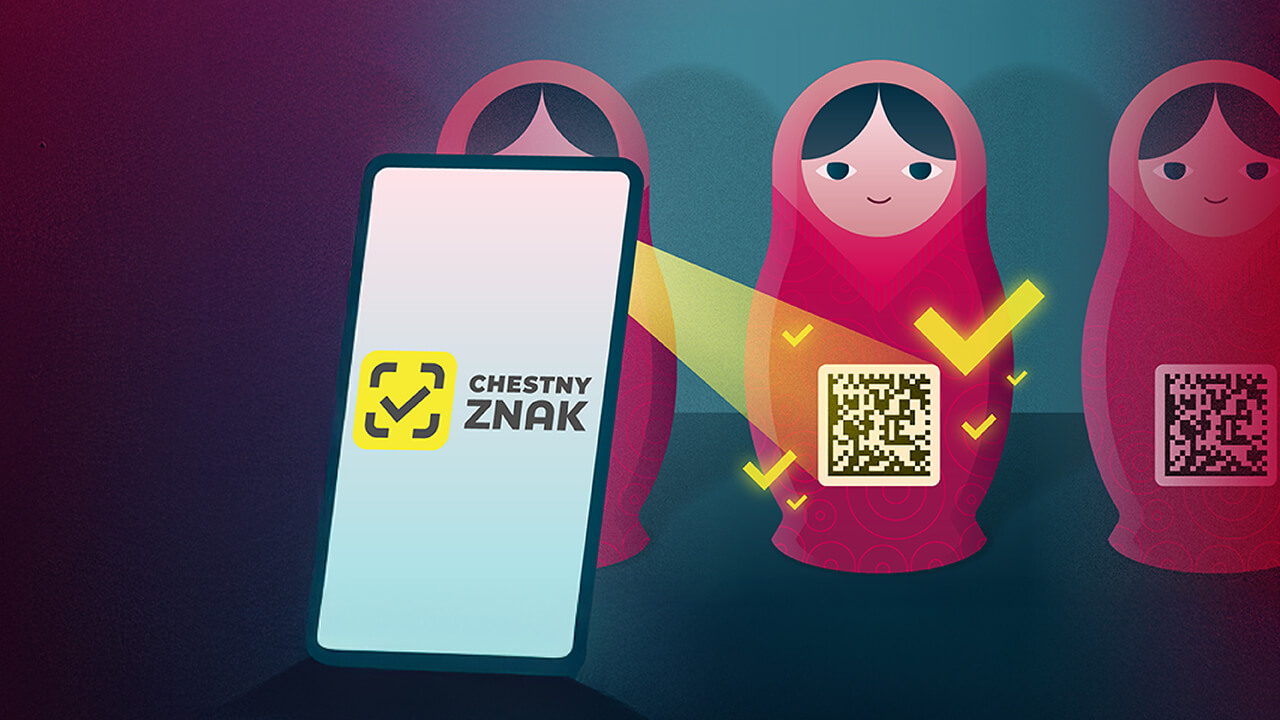
The new regulations require all products to be marked with unique digital codes, such as DataMatrix codes, to enable tracking of each product unit from production to distribution.
The new system is based on Chestny ZNAK, the national Russian platform that is linked to state databases and customs services. In this way, all products entering the country are tracked in real time, ensuring authenticity and legality.
Businesses affected by the new traceability rules in Russia
The extensive product traceability system affects not only companies operating within Russia, but also all those exporting products to the Russian market or cooperating with Russian distributors.
The sectors most affected are:
- The food and beverage industry, which requires detailed records of the origin and movement of each product.
- Cosmetics and personal care products, which from 2025 are included in the new mandatory labeling categories.
- Pharmaceutical and medical products, which are already monitored through special serial codes.
- Electronic devices, clothing and light industry items, such as footwear, accessories and fabrics.
- Distributors and trading companies operating through third countries but with a final destination in Russia.
The changes for these businesses concern not only product labeling but also the organization of production, storage and export processes, as well as the integration of digital tools that can automatically monitor traceability data.
The essential system for exporting to Russia? An ERP system!
Naturally, businesses most affected by the new traceability rules in Russia cannot be left with their hands tied. More than simple adaptation to labels and product codes is required! Comprehensive data management, accuracy and real-time tracking are required.
Businesses can find all of this within an ERP system! A modern ERP system with traceability capabilities allows the business to control every stage of the supply chain, from production and storage to labeling and export.
What does a modern ERP system provide?
The requirements for compliance in the Russian market leave no room for errors or delays, and a modern ERP system helps to avoid all of this, in various ways.
Accurate product tracking
Through features such as batch tracking and serial number management, ERP allows for the immediate identification of each product. So, in the event of an audit or recall, the company knows exactly where each batch is.
Automation and integration with export platforms
A modern ERP connects to customs systems, tax authorities, or even platforms such as Chestny ZNAK, allowing for automatic data updates. This reduces errors and delays in shipping processes.
Compliance and transparency reports
Through customized reports, ERP produces documentation of compliance with Russian traceability regulations, helping the company prove the legality and quality of its products.
Unified supply chain management
All data, from production to transportation, is collected in a single environment. This gives management a complete picture of the product’s progress and allows them to make timely decisions.
Why compliance is now a competitive advantage
Compliance with international regulations is not an obligation, but an element of competitive advantage. Both partners and the market itself are looking for transparency, reliability and evidence that products meet all specifications.
A company that complies with the help of an ERP system can prove the quality and legality of its products, avoid delays and fines and ultimately strengthen the reputation and trust of its partners.
Hubin’s modern ERP system gives companies a modern, flexible and fully customizable tool that meets the needs of traceability and compliance in the Russian market and beyond.
Frequently Asked Questions (FAQs)
Why is Russia strengthening traceability rules?
The Russian government aims to curb illegal trade and increase transparency in the market. Through the Chestny ZNAK platform, it now tracks the progress of every product entering or produced in the country, ensuring that it meets legal standards.
Which companies must comply?
The rules apply to all companies that export products to Russia or work with Russian distributors. The food, cosmetics, pharmaceutical, electronics and light industry sectors, such as clothing and footwear, are particularly affected.
You can read everything you need to know about the new Russian system in Hubin’s detailed guide to Chestny ZNAK.
How does an ERP system help with Russian regulatory compliance?
An ERP with traceability capabilities automates the collection, storage, and tracking of data for each product. This facilitates integration with platforms like Chestny ZNAK, ensures compliance, and reduces export management time.
How can Hubin support my business?
Hubin offers ERP solutions designed for businesses operating internationally. Through traceability and automation modules, it helps companies stay compliant with new regulations and enhance the efficiency of their exports.