Allergenic Products: How an ERP improves their management

4 min read
One of the most critical issues that every business in the food industry has to face is the management of allergenic products. From the very first stage of production, to storage, proper labeling and distribution, each stage requires accuracy, control and immediate access to information.
In a production environment where errors primarily affect consumer safety and secondarily the reputation of the company, human errors and omissions in updating a label have no place.
The solution comes from a modern ERP system, which functions as a central control mechanism that ensures that the information remains unchanged and valid at all stages.
Why is allergen management so important?
Allergen management is not just a formal obligation imposed by law. It is, above all, a commitment to consumer safety. An omission in the listing of an ingredient or a contamination during production can have serious consequences for a person’s health, but also disastrous consequences for the company itself, from costly batch recalls to irreparable damage to its reputation.
Allergenic foods require careful control at all stages of the process and the correct recording of ingredients, the avoidance of contamination, clear labeling and the ability to immediately trace a batch are elements that cannot be missing from an organized operation.
At the same time, companies are called upon to respond to increased compliance and quality control requirements, in an environment where accuracy and speed play a decisive role. For this reason, the management of allergenic products is not simply a procedural obligation but an essential part of the safety, organization and smooth operation of the business.
How can an ERP system improve the management of allergenic products?
A modern ERP system is not just a recording software, but is the connecting link that unites all the departments of a business. Through a single management environment, it gathers and organizes critical information regarding raw materials, recipes, batches, production, storage and distribution, so that each stage operates with greater accuracy and consistency.
Centralized management and direct access to information
An ERP system allows all involved departments of a company to have access to the same, up-to-date data, reducing the errors and inconsistencies that often arise when information is transferred manually or remains scattered in different files.
This information is crucial in the management of allergenic products.
Improved product and batch traceability
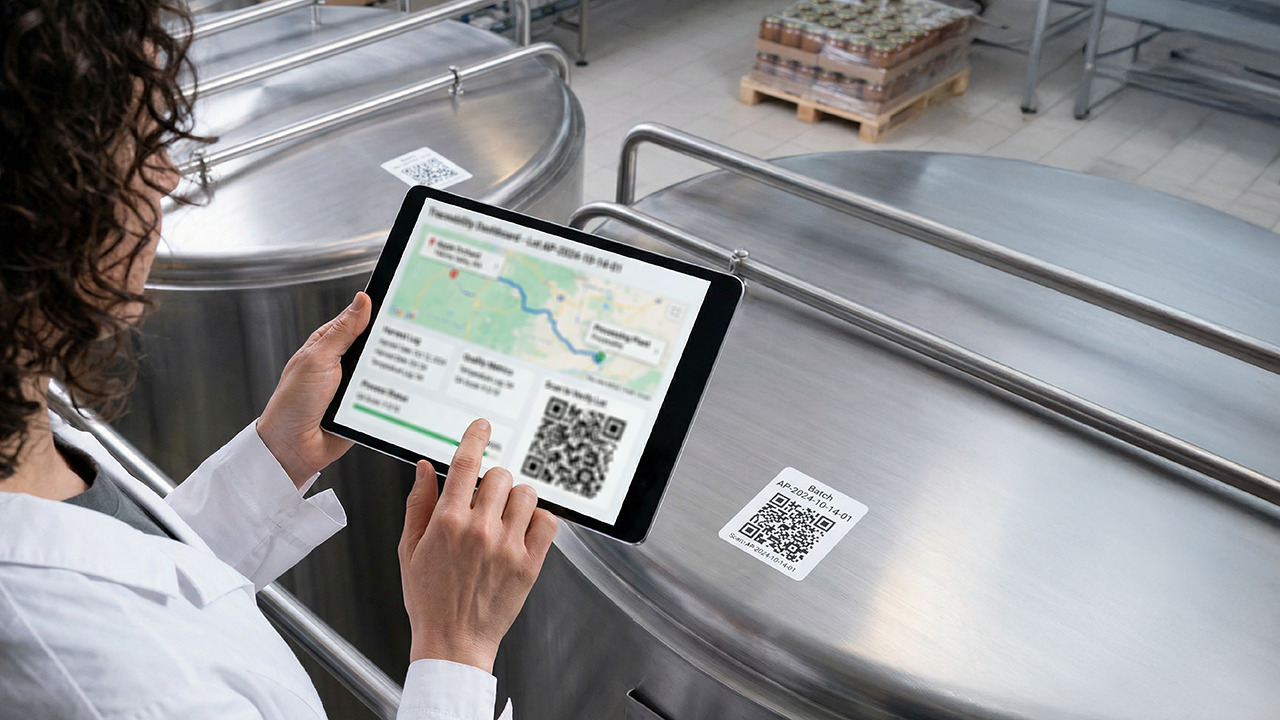
Traceability is one of the most important advantages of an ERP system, at every stage of the process. The company can immediately know which raw materials were used, in which batch they were incorporated and where each product has been distributed. This greatly facilitates the management of controls, but also the immediate reaction in the event of a recall or change of data.
Support for correct labeling
Correct labeling is a critical element in the management of allergenic products. Through a modern ERP system, the information accompanying the product is drawn from a common and controlled database, which reduces the chances of incorrect labeling or incomplete information on the labels.
Better control of internal processes
In addition to recording data, the ERP system also contributes to the overall organization of the business. The production, storage and movement of products can be monitored more effectively, resulting in reduced omissions and enhanced control at critical points in the process.
Enhancing compliance and safety
When information is centrally organized and easily accessible, a business can more effectively respond to compliance and quality control requirements. Thus, the ERP system not only strengthens internal operations, but also acts as a tool that supports product safety and the overall reliability of the business.
Preventing cross-contamination through programming
An ERP not only manages data, but also time. It allows a business to schedule production in an intelligent way. For example, products containing allergens can be placed at the end of the production schedule, so that general cleaning of the machines follows, drastically reducing the risk of contamination in subsequent batches.
Immediate response to supplier changes
What happens when a supplier changes the specifications of a raw material? In a manual system, this would mean dozens of hours of checking and changing each recipe individually, with the risk of error lurking. With the mass update capability offered by an ERP system, the change is made once in the material tab and is automatically “transferred” to each affected recipe and label. Thus, the business remains flexible and completely safe, even in the most sudden changes in the supply chain.
Managing allergenic products requires precision, consistency and complete control at every stage of the production and logistics process. From central information management and correct labeling, to food traceability, process control and faster adaptation to changes, an ERP system, such as Hubin, can contribute to creating a safer and more organized operating framework. For food businesses, it is not just a technology tool, but a substantial investment in safety, compliance and reliability.
Frequently Asked Questions about Allergenic Products and the use of ERP system
-
What are the main allergens that a food business must manage?
According to European legislation, there are 14 main allergens (such as gluten, milk, eggs, nuts, soy, etc.) that must be labeled. An ERP system allows for the full tracking of these substances from the receipt of the raw material to the final product.
-
How does an ERP system reduce the risk of product recalls?
ERP eliminates human error in keying labels and ensures that labeling is always consistent with the recipe used in production. At the same time, through immediate traceability, it allows the identification and withdrawal of specific batches in a minimum of time, limiting damage.
-
Can an ERP help control cross-contamination?
Yes, through proper production planning and warehouse management. The ERP system can suggest the optimal batch production sequence and guide the storage of materials in discrete areas, to avoid accidental contact of allergens with "clean" raw materials.
-
Is an ERP necessary for a small food business?
Regardless of size, the regulatory requirements and need for security remain the same. An ERP offers smaller businesses the organization and reliability of a large industry, allowing them to grow without the stress of manually managing data.