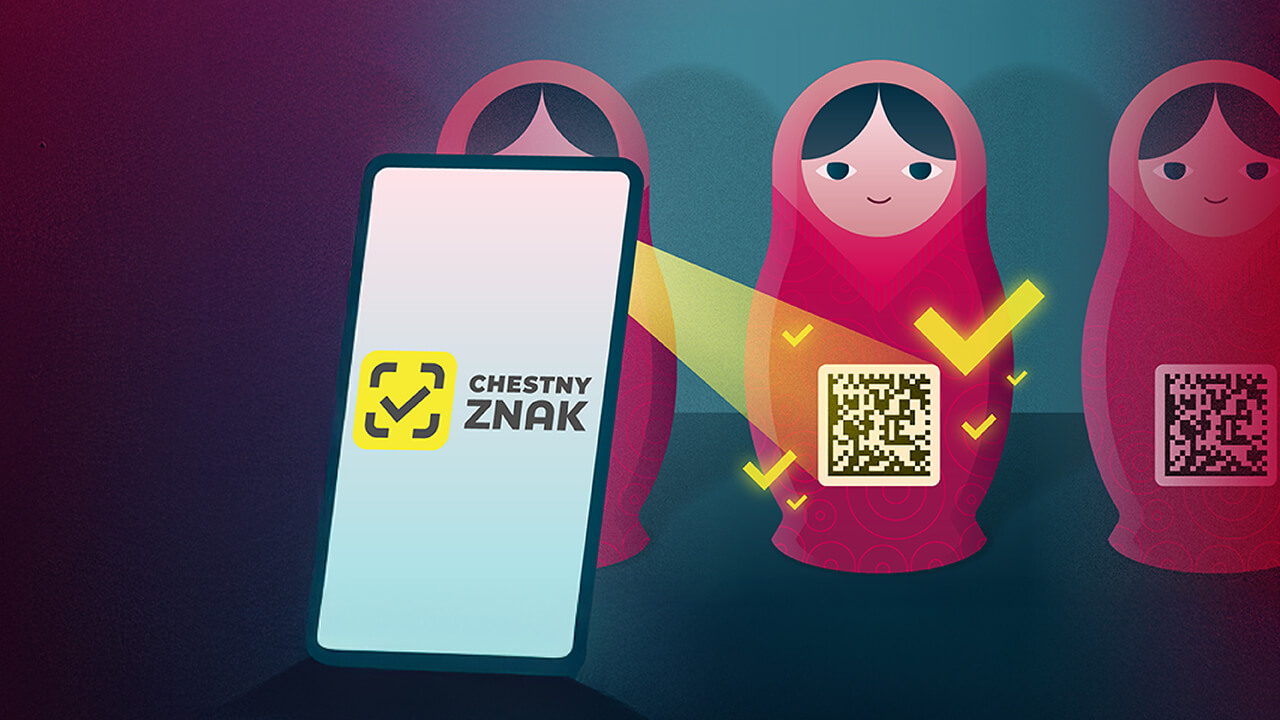
Chestny ZNAK: What changes in 2026?

6 min read
2026 is just around the corner and many companies operating in the Russian market are looking for the best ways to prepare for the changes that are coming. The Chestny Znak digital signage system has already become a mandatory part of the supply chain and is expected to gain an even more central role.
However, in addition to the greater importance it will gain, new rules are coming for tobacco products and vape products, which will create a completely different reality for producers, importers and those involved in retail.
What is Chestny Znak?
If you are not familiar with the Russian system, you can read Hubin’s article on Chesnty ZNAK, in which we explain in detail how it works and the product categories it covers.
What will change in 2026 in Chestny Znak?
A new year, new obligations for entrepreneurs operating in the Russian market, in various product categories.
In 2026, the Russian digital labeling system Chestny Znak expands to new product categories and significantly tightens the framework for products under regulation. The changes that have been announced so far concern both food and tobacco products, while pilot programs are also underway that may lead to mandatory labeling of even more categories in the near future.
Mandatory labeling of confectionery products
One of the most important extensions of the Chestny Znak from 2026 concerns the gradual inclusion of more confectionery and bakery products in the digital labeling system.
The implementation is expected to take place in three phases.
- March 1, 2026: Implementation begins for cookies, jams, waffles, chocolates, nut pastes and similar products.
- May 1, 2026: Implementation begins for cakes, rolls and confectionery pastries.
- July 1, 2026: Implementation begins for chocolate products and chewing gum.
From these dates, labeling in these categories will be mandatory, aiming to reduce uncertified products but also to ensure quality and traceability in a market with high volume and frequent counterfeiting.
New rules for tobacco products and vaping
The Russian market will implement a very strict licensing framework from 2026 for tobacco products and vaping products. Specifically, from March 1, 2026, the sale of cigarettes, heated tobacco products and vaping requires an official license for all forms of distribution, namely wholesale, retail and delivery services.
The transition period will end on September 1, 2026. From that date onwards, the sale of tobacco and nicotine products without the corresponding license will be prohibited, while full implementation and final sanctions are scheduled to take effect from autumn 2027. Emphasis will be placed on combating illegal trade and ensuring full traceability.
If you are wondering how these changes are related to Chestny Znak, the answer is that the licensing requirement will be accompanied by stricter monitoring of the supply chain and control of each package through digital labeling.
Pilot programs and possible future expansions
In addition to the already announced mandatory changes, several more product categories are in a pilot phase in 2026. These test applications serve as preparation for their possible future inclusion in the Chestny Znak system, either at the end of the year or in 2027.
Among the categories currently being tested are:
- Low-alcohol alcoholic beverages
- Medical devices
- Cosmetics and personal care products
- Household chemicals
- Automotive spare parts
Although there is no official timetable for their mandatory labeling yet, the fact that they have been included in the pilot phase clearly shows the direction the Russian system is taking, namely a fully digital, transparent and controlled market, where almost all products will have a unique traceability code.
What do the changes coming to the Russian market in 2026 mean for businesses?
The changes that will come to the Russian market in 2026 will affect both manufacturers and importers as well as retail companies operating in this market.
As is understandable, for businesses whose products are included in the Chestny Znak, compliance is a prerequisite for continuing commercial activity.
In practice, therefore, businesses are called upon to make correct registration and create product cards, where required. It is necessary to make timely receipt and printing of Data Matrix codes, to have systems and equipment that support scanning and management of traceability at all stages of the chain.
At the same time, it will be necessary to keep inventory control procedures up to date to avoid the disposal of unmarked products, as well as the timely submission and renewal of licenses for tobacco products and nicotine products.
Businesses that fail to comply in a timely manner risk fines, delays in imports, withdrawal of products from the market or, in the case of tobacco products, even a sales ban.
How can businesses prepare for the changes in the Russian market in 2026?
With the new requirements becoming increasingly complex, timely preparation is key to the smooth operation of any business exporting or operating in the Russian market.
Preparation includes both organizational and technical actions to ensure that all products comply with Chestny Znak deadlines and specifications. In practice, businesses need to ensure:
- Registration of all products in the system and correct creation of product cards
- Interconnection with ERP systems that can support the process, from the creation of Data Matrix codes to inventory control
- Equipment that meets the requirements of Chestny Znak, such as scanners, printers and POS systems compatible with 2D Data Matrix
- Infrastructure for real-time information on the progress of products, both during production and during transportation
- Clear compliance control procedures, to avoid delays or rejection of shipments during import into Russia
Solutions such as Hubin’s ERP systems and traceability systems offer a significant advantage. The automation of processes, the ability to interface with CRPT and full monitoring of the supply chain reduce the risk of errors and ensure that each product will comply with the 2026 requirements without unnecessary burden on production and logistics teams.
The changes coming in 2026 to the Chestny Znak system are another step towards a fully digital and transparent market in Russia. The expansion into new product categories, the introduction of tobacco and vape licenses, as well as ongoing pilot applications show that compliance is no longer just a formal procedure, but part of the daily operation of every business.
Businesses must have timely preparation, the right technical infrastructure and the use of reliable traceability systems in order to smoothly adapt to the new framework. In this environment, businesses that will invest in the right organization and automation have a clear competitive advantage in both the compliance process and their business continuity.
Frequently Asked Questions about the changes to Chestny Znak in 2026
Which products are affected by the changes to Chestny Znak in 2026?
In 2026, mandatory digital labeling through Chestny Znak is expanded, affecting several product categories, such as:
• biscuits, waffles, jams, chocolates and nut pastes
• cakes, rolls and confectionery
• chocolate products and chewing gum
• all tobacco, heated tobacco products and vaping products (due to new licenses)
In addition, categories such as medical devices, cosmetics, household chemicals and car parts are also in the pilot stage.
When will the changes to the Russian digital signage system take effect?
The changes are being implemented gradually throughout 2026:
• March 1, 2026 is the first phase of confectionery (biscuits, waffles, chocolates, etc.) and a license requirement for tobacco & vape
• May 1, 2026 will be the second phase of confectionery (cakes, rolls)
• July 1, 2026 we move to the third phase of confectionery (chocolates, chewing gum)
• September 1, 2026 will begin the ban on the sale of tobacco products without a license
• Transitional period until September 2027 for full implementation of the rules on nicotine products
What are the key costs and technical requirements for Chestny Znak in 2026?
Compliance with the new changes to the Russian digital signage system requires equipment that supports Data Matrix (printers, scanners, POS), upgrading ERP systems to connect to CRPT, creating and managing unique codes, as well as staff training.
In addition, it takes time to configure internal processes that will meet the new specifications.
What are the risks if a business does not comply with the new Chesnty Znak changes from 2026?
Failure to comply with the changes to the Chestny Znak may result in fines, import delays, rejection of shipments, or a ban on the sale of products in Russia.
For tobacco and nicotine products, the lack of a license after 2026 means a ban on sales. Incorrect or incomplete CRPT information can also cause significant financial and operational losses.
What equipment does a business need to properly implement the Chestny Znak changes?
For a business to fully comply with the changes coming to Chesny Znak from 2026, printers for Data Matrix codes, 2D scanners, POS compatible with digital signage and ERP that supports interface with CRPT are required.
The right equipment is essential for proper traceability at all stages of production and distribution.
How do the 2026 changes to Chestny Znak affect the daily operation of a business?
Businesses that want to comply with the Chestny Znak changes from 2026 will need more organized processes for production, inventory tracking, code control, and CRPT updates. Compliance becomes part of the daily workflow, not just a legal obligation.
How can Hubin help with Chestny Znak compliance?
Hubin supports businesses at every stage of the Chestny Znak compliance process, providing comprehensive ERP and traceability solutions that cover all the technical and organizational requirements of the system.
With connectivity to the CRPT platform, automated creation and management of Data Matrix codes, full inventory tracking and real-time supply chain control, businesses reduce the risk of errors and delays.
At the same time, the Hubin team offers guidance on creating product cards, the correct product registration process and adapting internal workflows to the 2026 specifications. In this way, compliance becomes simple, fast and completely controllable for every business.